EN
EN
 jp
jp  ko
ko  fr
fr  de
de  es
es  it
it  ru
ru  pt
pt  ar
ar  th
th 
Premium incontinence care packaging in 2026 is no longer judged only by appearance. Global buyers, retailers, and healthcare distributors now evaluate packaging based on sustainability, regulatory compliance, product protection, user convenience, and brand differentiation. Manufacturers that combine eco-friendly materials with practical packaging engineering can improve shelf appeal, reduce transportation costs, meet environmental regulations, and increase customer loyalty.
Whether sourcing incontinence pads wholesale, china incontinence pads, disposable incontinence underpads, or premium pull up incontinence pants, packaging has become an important part of product value—not just a protective outer layer.
The global incontinence market is shifting toward premium products designed for aging populations, home healthcare, hospitals, and e-commerce distribution. Buyers now expect packaging that delivers:
Better product protection
Lower environmental impact
Strong retail presentation
Easy storage and transportation
Convenient opening and resealing
Compliance with international sustainability standards
For OEM and private-label brands, packaging quality often influences purchasing decisions before consumers ever experience the product itself.
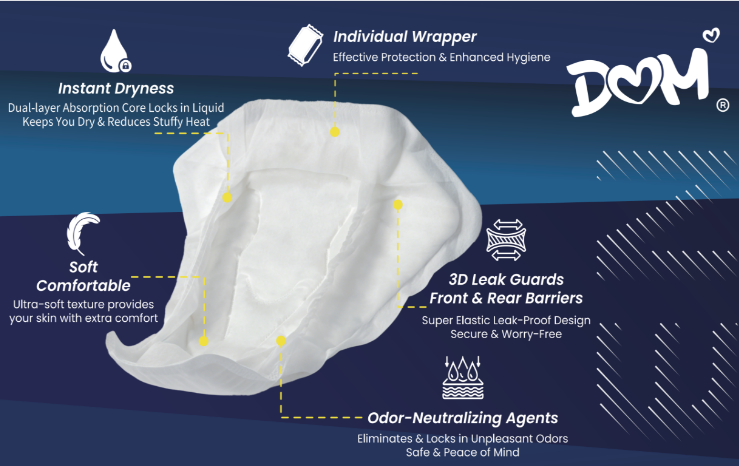
Leading manufacturers are gradually replacing traditional multilayer plastic packaging with more sustainable alternatives while maintaining moisture protection and product hygiene.
Popular eco-friendly options include:
Excellent moisture barrier
Compatible with existing recycling streams in many countries
Lower carbon footprint than mixed-material laminates
Many European retailers now encourage packaging containing recycled content.
Advantages include:
Reduced virgin plastic usage
Improved ESG performance
Strong sustainability messaging
Derived from renewable resources such as sugarcane or corn.
Suitable for:
Premium retail brands
Eco-conscious healthcare products
Markets with strong sustainability regulations
Secondary packaging increasingly uses responsibly sourced paperboard.
Benefits:
Recyclable
Premium appearance
Better branding opportunities
High-end packaging is designed around both caregivers and end users.
Modern features include:
Older adults often struggle with excessive sealing force.
Improved tear designs reduce frustration without compromising hygiene.
Especially valuable for:
pull ups incontinence
pull up pants for incontinence
Adult briefs
Premium pad packaging
Benefits include:
Better moisture protection
Cleaner storage
Extended product freshness
Growing demand exists for:
8-count packs
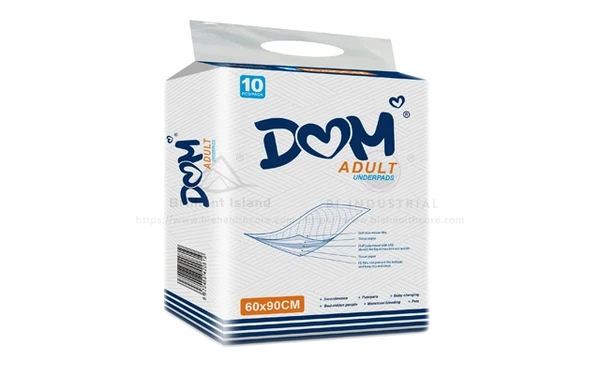
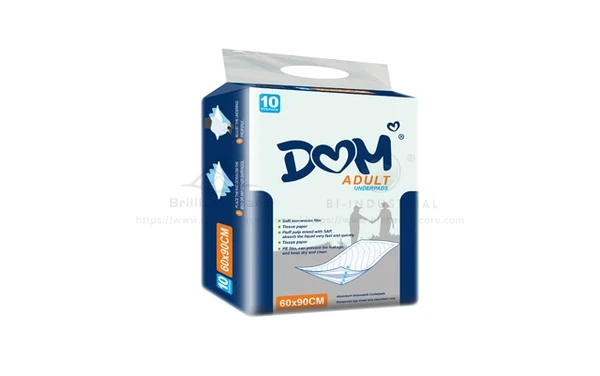
10-count packs
Travel packs
Trial-size packaging
These formats are increasingly popular in pharmacies and online marketplaces.
Packaging optimized for online sales differs from traditional retail packaging.
Important considerations include:
Products should withstand:
Warehouse stacking
Long-distance shipping
Courier handling
Structural testing helps minimize package deformation.
Optimized packaging dimensions provide:
Lower freight costs
Better pallet utilization
Reduced carbon emissions
High-end manufacturers use:
Moisture-resistant inner bags
Dust-proof sealing
Hygienic product separation
This is particularly important for:
incontinence underpads disposable
Premium packaging communicates quality before consumers open the product.
Luxury healthcare brands commonly use:
Minimalist design
Soft medical color palettes
Matte finishes
Embossed logos
Clean typography
Premium photography
Consumers often associate sophisticated packaging with:
Better absorbency
Higher comfort
Medical reliability
Even when product specifications are similar, premium packaging can significantly improve perceived value.
International buyers increasingly require standardized labeling.
Recommended information includes:
Size
Absorbency level
Gender suitability
Quantity per pack
Include certifications such as:
CE (where applicable)
FDA registration information (for relevant markets)
ISO quality management certifications
Manufacturing country
Avoid vague sustainability claims.
Instead, provide measurable information such as:
Recyclable packaging
PCR content percentage
FSC certification
Plastic reduction percentage
Transparent environmental communication builds trust with distributors and consumers.
Premium pull up incontinence pants for adults require packaging that emphasizes both convenience and discretion.
Recommended features include:
Soft matte films create a premium feel while reducing glare on retail shelves.
Many adult users prefer packaging that resembles personal care products rather than medical supplies.
Modern designs avoid:
Clinical imagery
Embarrassing terminology
Excessive product demonstrations
Large family packs increasingly incorporate:
Reinforced die-cut handles
Comfortable grip zones
Strong load-bearing performance
These features improve usability for caregivers.
Environmental legislation continues to reshape packaging requirements.
Major purchasing regions increasingly focus on:
Packaging waste reduction
Recyclability targets
Extended Producer Responsibility (EPR)
Growing retailer demand for:
Recycled materials
Plastic reduction
Sustainable sourcing documentation
Many premium retailers now request:
Eco-friendly packaging
Reduced packaging weight
Carbon footprint reporting
Manufacturers supplying china incontinence pads for export are investing heavily in sustainable packaging technologies to remain competitive.
Industry leaders are introducing smarter packaging technologies.
Examples include:
Consumers can instantly access:
Product instructions
Certification information
Manufacturing traceability
Brand websites
Anti-counterfeiting technologies help distributors verify genuine products.
Healthcare institutions increasingly adopt:
Barcode optimization
RFID compatibility
Automated inventory management
Choosing a packaging supplier involves more than comparing prices.
Evaluate suppliers based on:
Material sourcing transparency
Sustainability certifications
Printing quality
Moisture barrier performance
Compression testing reports
Color consistency
Packaging automation capability
OEM customization experience
Reliable suppliers should also provide prototype development and transportation testing before mass production.
Recyclable PE films combined with PCR content currently offer one of the best balances between environmental performance, product protection, manufacturing efficiency, and cost.
Not when properly engineered. Modern sustainable materials can provide excellent moisture resistance, puncture protection, and transportation durability comparable to conventional packaging.
Minimalist packaging improves shelf visibility, enhances perceived product quality, and appeals to consumers seeking discreet, modern healthcare products.
Yes. Customized packaging helps private-label brands establish unique market positioning, strengthen consumer recognition, support retail merchandising, and increase perceived product value.
Increasingly, yes. Many international distributors and retailers now include sustainability criteria in supplier evaluations, making eco-friendly packaging an important factor for long-term market access.
As environmental regulations tighten and consumer expectations continue to evolve, packaging has become a strategic asset rather than a simple protective layer. High-end incontinence care packaging in 2026 must successfully balance sustainability, functionality, logistics efficiency, regulatory compliance, and premium branding.
For manufacturers supplying incontinence pads wholesale, china incontinence pads, disposable incontinence underpads, incontinence underpads disposable, pull ups incontinence, pull up pants for incontinence, pull up incontinence pants for adults, and pull up incontinence pants, investing in advanced packaging solutions creates measurable advantages in global markets. By adopting recyclable materials, user-friendly structural designs, optimized e-commerce packaging, and transparent environmental communication, OEM suppliers can strengthen customer confidence, improve brand value, and achieve sustainable long-term growth.
*BI-Ehealthcare makes no warranties or representations regarding the completeness or accuracy of the information. This information should be used only as a guide and should not be relied upon as a substitute for professional medical or other health professional advice.