EN
EN
 jp
jp  ko
ko  fr
fr  de
de  es
es  it
it  ru
ru  pt
pt  ar
ar  th
th 
High-quality men's protective pads undergo a comprehensive quality inspection process that begins with raw material verification and continues through in-process production monitoring, absorbency testing, leakage resistance evaluation, skin safety assessment, microbiological control, packaging inspection, and final batch release. For manufacturers supplying healthcare brands, retailers, and OEM/ODM partners, strict quality control is essential not only for product performance but also for regulatory compliance and customer satisfaction.
This article explains how professional manufacturers inspect pads for men's leakage, what testing standards matter most, and what buyers should look for when sourcing reliable products.
Unlike ordinary hygiene products, men's pads for leakage must deliver consistent performance under varying pressure, movement, and fluid volume. Even minor production defects can result in leakage, discomfort, odor issues, or customer complaints.
For private label brands, distributors, hospitals, and pharmacies, poor quality can lead to:
High product return rates
Brand reputation damage
Regulatory risks
Increased customer complaints
Reduced repeat purchases
Professional manufacturers implement multi-stage inspections to ensure every production batch meets predetermined specifications.
Quality control begins before production starts.
Every incoming material is inspected to verify compliance with technical specifications.
Typical materials include:
Fluff pulp
SAP (Super Absorbent Polymer)
Nonwoven topsheet
Acquisition distribution layer (ADL)
PE breathable backsheet
Hot melt adhesive
Elastic materials
Release paper
Packaging materials
Inspection items generally include:
Material dimensions
Weight (gsm)
Moisture content
Whiteness
Absorption capacity
Tensile strength
Softness
Breathability
Odor
Appearance defects
Only qualified materials enter production.
Modern men's guard manufacturing uses automated inspection systems together with manual quality checks.
Operators continuously monitor:
Product dimensions
Folding accuracy
SAP distribution
Adhesive positioning
Elastic placement
Core alignment
Cutting precision
Seal integrity
Automatic vision systems can detect:
Missing SAP
Material wrinkles
Offset layers
Broken products
Missing release paper
Printing defects
Any abnormalities trigger immediate production adjustments.
Absorbency is the most important performance indicator for best men's incontinence guards.
Laboratories typically evaluate:
Measures the maximum liquid volume the guard can retain.
Determines how quickly urine is absorbed into the core.
Fast absorption helps keep the surface dry.
After absorption, pressure is applied to measure how much moisture returns to the surface.
Lower rewet values indicate better skin comfort.
Measures how much liquid remains locked inside the absorbent core after pressure.
High retention reduces leakage during movement.
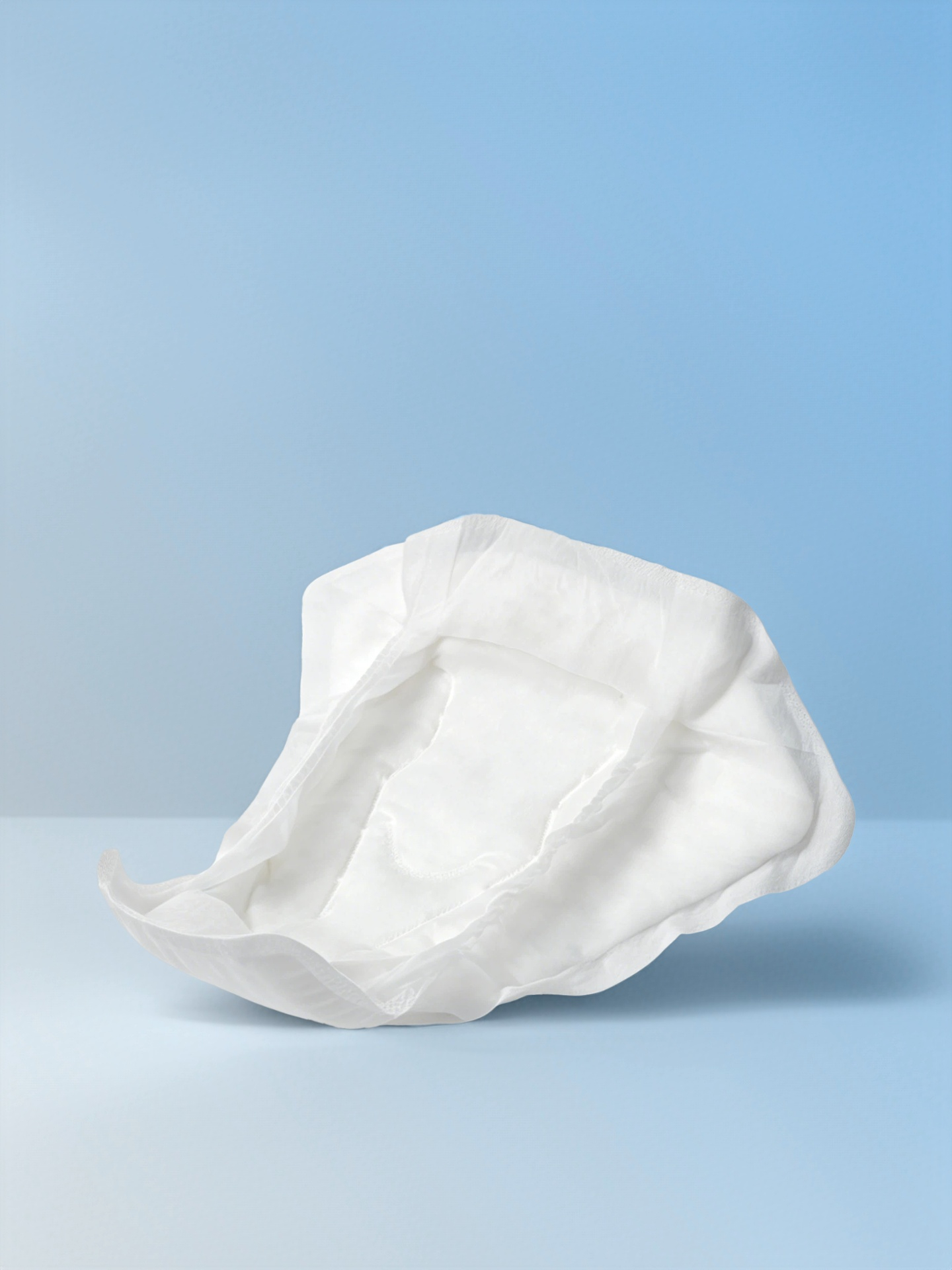
Leakage testing simulates real-life use conditions.
Manufacturers evaluate:
Side leakage
Front leakage
Back leakage
Leakage under pressure
Leakage while moving
Leakage after repeated wetting
Testing often includes synthetic urine introduced at controlled flow rates to replicate actual usage.
Products failing leakage tests are rejected before shipment.
Uniform SAP distribution determines how effectively liquid spreads throughout the absorbent core.
Poor distribution can cause:
Localized saturation
Leakage
Bulging
Poor wearing comfort
Manufacturers inspect SAP consistency using both automated weighing systems and destructive laboratory analysis.
Since men's guards remain in contact with skin for extended periods, dermatological safety is essential.
Testing may include:
Skin irritation assessment
Sensitization evaluation
pH testing
Material biocompatibility
Chemical residue analysis
Many manufacturers also ensure compliance with regulations limiting harmful substances.
Clean manufacturing environments help reduce contamination risks.
Routine microbiological testing includes:
Total bacterial count
Yeast and mold count
Pathogen screening
Environmental monitoring
Air quality inspection
Equipment sanitation verification
Strict hygiene management is particularly important for products intended for healthcare markets.
Packaging protects products throughout transportation and storage.
Quality inspectors evaluate:
Seal strength
Printing accuracy
Lot coding
Barcode readability
Package dimensions
Moisture resistance
Carton strength
Label compliance
Incorrect packaging can lead to damaged products even if manufacturing quality is excellent.
Before shipment, random samples from each production batch undergo final verification.
Common inspection items include:
| Inspection Item | Purpose |
|---|---|
| Product dimensions | Consistent sizing |
| Weight | Material consistency |
| Absorbency | Performance verification |
| Rewet value | Dryness evaluation |
| Leakage resistance | Functional performance |
| Adhesive performance | Secure fixation |
| Appearance | Cosmetic quality |
| Packaging | Shipment readiness |
Only approved batches are released for delivery.
Reliable manufacturers often implement internationally recognized quality systems.
Examples include:
ISO 9001 Quality Management
ISO 13485 Medical Device Quality Management (where applicable)
CE compliance for applicable markets
FDA registration where required
GMP manufacturing practices
Internal quality control procedures
Depending on the destination market, additional customer-specific testing may also be required.
Consistency is achieved through process control rather than relying only on final inspection.
Key methods include:
Standard operating procedures (SOPs)
Automated production equipment
Statistical process control (SPC)
In-line monitoring
Batch traceability
Operator training
Regular equipment calibration
Continuous improvement programs
This systematic approach minimizes production variation and maintains stable product quality over time.
When sourcing pads for men's leakage, buyers should evaluate more than price alone.
Important considerations include:
Experienced manufacturers often have more mature quality systems and process control.
A well-equipped laboratory indicates stronger quality assurance.
Ask whether the supplier can perform:
Absorption testing
Rewet testing
Leakage testing
SAP analysis
Material verification
Microbiological testing
Reliable manufacturers should be able to trace every production batch back to:
Raw materials
Production date
Operators
Equipment
Inspection records
Private label customers benefit from suppliers that can customize:
Absorbency levels
Product dimensions
Packaging
Branding
Material selection
Although many manufacturing technologies are shared, testing protocols differ because product design and intended use are different.
For example:
Men's protective pads are engineered to manage front-loaded urine flow and fit male anatomy.
Women's pads for incontinence are designed for different absorption patterns and body contours.
Women's incontinence pull up pants require additional testing for elasticity, seam strength, and garment durability.
Products made for menstrual care, including those supplied to women's sanitary pads brands, focus on fluid characteristics and wear conditions that differ from urinary incontinence products.
As a result, manufacturers use different product-specific performance criteria even when production equipment is similar.
Manufacturers typically use standardized laboratory methods that measure total absorbency, absorption speed, liquid retention, and rewet performance using controlled volumes of test fluid. These evaluations help verify that products perform consistently under expected usage conditions.
High-performing products combine premium raw materials, balanced SAP distribution, ergonomic design, strong leakage barriers, breathable backsheet materials, and rigorous quality inspection throughout production.
Professional manufacturers conduct inspections at multiple stages, including incoming material inspection, in-process quality monitoring, laboratory testing, packaging inspection, and finished product release. Continuous monitoring helps identify and correct issues before products reach customers.
Batch traceability enables manufacturers to identify the source of any quality issue quickly. By linking finished products to raw materials, equipment, production dates, and inspection records, manufacturers can support effective quality management and corrective actions when necessary.
A dependable men's guard is the result of disciplined quality management rather than a single final inspection. From verifying raw materials to monitoring production, evaluating absorbency and leakage resistance, assessing skin safety, and inspecting packaging, each stage contributes to product reliability and user confidence.
For distributors, healthcare providers, and private label brands, partnering with a manufacturer that maintains comprehensive inspection procedures, robust laboratory capabilities, and full production traceability is essential. Consistent quality not only reduces product risks and customer complaints but also supports long-term brand reputation and market success.
*BI-Ehealthcare makes no warranties or representations regarding the completeness or accuracy of the information. This information should be used only as a guide and should not be relied upon as a substitute for professional medical or other health professional advice.