EN
EN
 jp
jp  ko
ko  fr
fr  de
de  es
es  it
it  ru
ru  pt
pt  ar
ar  th
th 
Exporting men’s incontinence products to Europe is highly profitable, but success depends on strict regulatory compliance, product performance stability, and selecting the right OEM/ODM manufacturing partner. European buyers prioritize absorbency efficiency, skin safety, discreet design, and certified quality systems before considering price.
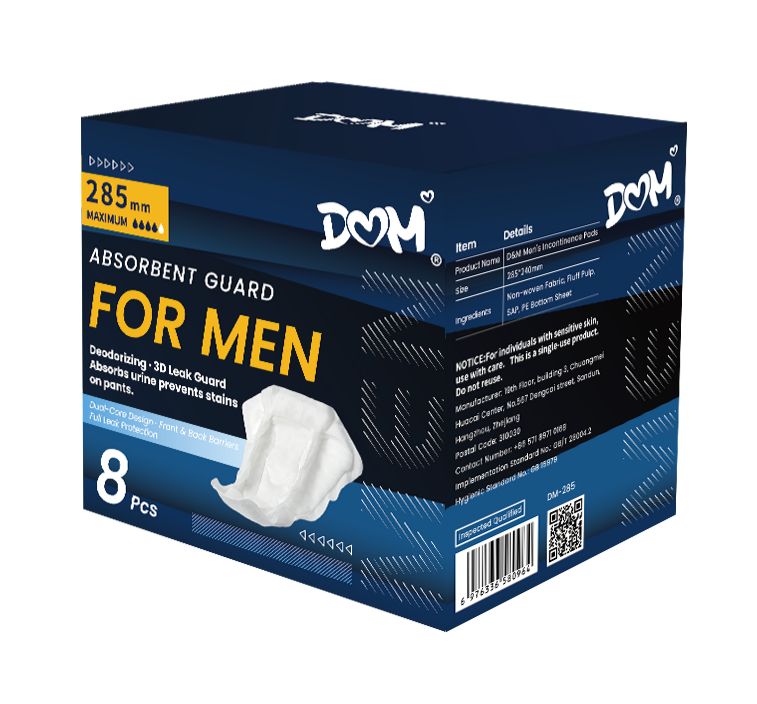
The most competitive product categories include Guards for Men, light incontinence pads, and high-absorbency protective underpads designed for hospital and homecare use.
To enter the European market, men’s incontinence products must comply with EU medical device and chemical safety regulations.
Key requirements include:
CE marking under EU MDR (Medical Device Regulation 2017/745)
ISO 13485 certified quality management system
REACH compliance for chemical safety (especially SAP, adhesives, nonwoven materials)
Biocompatibility testing (skin irritation and cytotoxicity)
Absorbency and leakage performance validation
Proper labeling in EU languages (batch number, composition, usage instructions)
Without these certifications, products such as Guards for Men or china incontinence pads cannot legally enter most European distribution channels.
European distributors and healthcare procurement teams mainly focus on three categories:
Designed for mild to moderate urine leakage
Discreet anatomical shape
High comfort and odor control
Common in elderly care and post-surgery recovery
Moderate absorbency level
Often sold through retail and pharmacies
Increasing demand in homecare segments
Widely used in hospitals and nursing homes
High-capacity absorption core
Disposable incontinence underpads are widely used as surface protection products in Europe’s medical and eldercare systems.
They are typically placed on:
Hospital beds
Nursing home mattresses
Wheelchairs
Post-operative recovery beds
Their key functions include:
Preventing mattress contamination
Reducing laundry workload in care facilities
Improving hygiene and infection control
In B2B sourcing, incontinence underpads disposable products are often purchased in bulk by hospitals and institutional buyers due to cost efficiency and hygiene standards.
Selecting the right manufacturer is the most critical factor in export success.
When sourcing china incontinence pads, buyers should evaluate:
Factory certifications (ISO 13485, CE technical file support)
Raw material traceability (SAP, fluff pulp, nonwoven fabric)
Production capacity and automation level
OEM/ODM customization capability
Consistency in absorbency performance
Export experience to EU markets
Reliable suppliers can support not only incontinence pads wholesale orders but also private label branding and regulatory documentation support for Europe.
Yes, but only if they have adapted hygiene product production lines.
A women's sanitary napkin manufacturer often shares similar production technology, such as:
SAP absorption core forming
Nonwoven surface layering
Leak-proof PE film backing
Adhesive and release paper systems
However, men’s products like Guards for Men require additional:
Anatomical shaping design
Stronger side leakage barriers
Better discretion and thinner structure
Manufacturers transitioning from sanitary napkins to male incontinence products must upgrade product design capability and ergonomic testing.
European consumers prefer products that combine discretion with high performance.
Key advantages include:
Ergonomic male-specific design
Thin yet highly absorbent core
Breathable materials for skin health
Strong odor-locking technology
Comfortable fit for daily mobility
These features make Guards for Men a fast-growing category in retail pharmacies and e-commerce channels across Europe.
European brands increasingly rely on Asian manufacturers for OEM/ODM cooperation.
Advantages include:
Lower production costs
Flexible customization (absorbency, size, packaging)
Faster product iteration
Private label development for pharmacies and supermarkets
Factories offering incontinence pads wholesale services with OEM/ODM capability are especially attractive for EU distributors looking to build private label product lines.
At minimum, CE marking, ISO 13485 certification, and REACH compliance are required for legal distribution.
Yes, in most EU markets they are classified under medical device regulations depending on intended use.
Guards for Men are anatomically shaped for male use, while standard pads are unisex and less contoured.
Yes, many European brands rely on china incontinence pads manufacturers for cost-effective OEM production and scalable supply chains.
Exporting men’s incontinence products to Europe requires more than competitive pricing. Success depends on regulatory compliance, product specialization, and manufacturing flexibility. Categories such as Guards for Men, disposable incontinence underpads, and OEM private label pads remain the strongest growth drivers in the EU market.
Manufacturers with strong R&D, certification support, and wholesale capability in incontinence pads wholesale are best positioned to capture long-term European demand.
*BI-Ehealthcare makes no warranties or representations regarding the completeness or accuracy of the information. This information should be used only as a guide and should not be relied upon as a substitute for professional medical or other health professional advice.