EN
EN
 jp
jp  ko
ko  fr
fr  de
de  es
es  it
it  ru
ru  pt
pt  ar
ar  th
th 
Auditing a men’s guard manufacturer should focus on five core areas: production capability, absorbent core technology, quality control, raw material traceability, and export/OEM service experience. A qualified supplier should be able to prove stable manufacturing capacity, consistent leakage protection, safe skin-contact materials, accurate packaging execution, and professional support for private label or OEM orders.
For buyers sourcing men’s guards, male incontinence pads, adult hygiene products, or related absorbent products, a factory audit is not just a formality—it directly affects product performance, customer complaints, repeat purchase rate, and brand reputation.
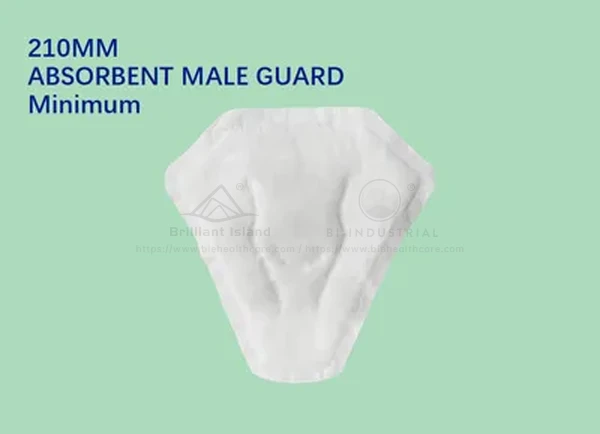
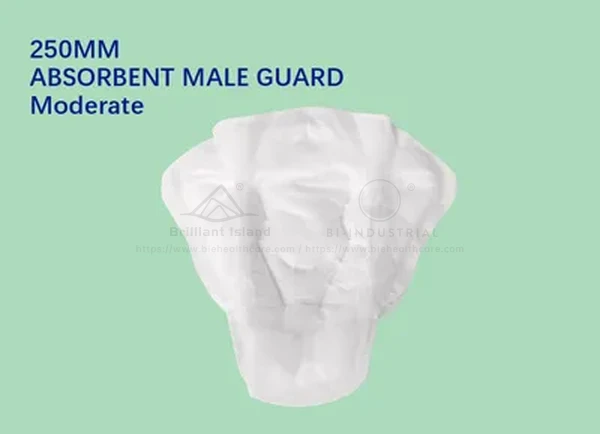
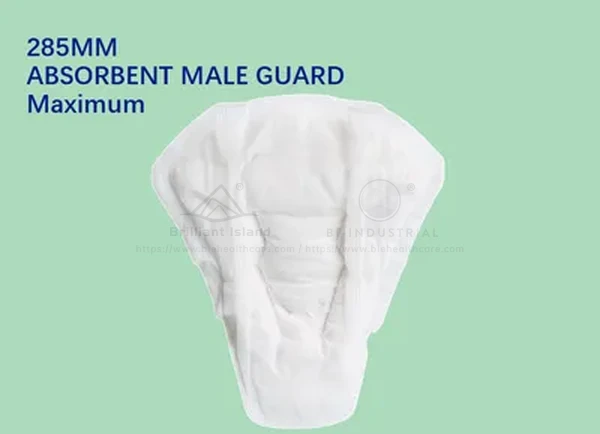
Start with the manufacturer’s product specialization and production scope. Men’s guards require specific design knowledge because they are not simply small adult diapers or reshaped sanitary pads. They must fit male anatomy, absorb urine quickly, stay discreet under clothing, and prevent side leakage during daily movement.
During the first audit stage, confirm whether the factory has experience in:
Men’s guards or male incontinence pads
Adult incontinence pads
Adult diapers and pull-up diapers
Absorbent hygiene OEM production
Private label packaging
Export documentation and international compliance
If the supplier is also a wholesale adult pull up diapers manufacturer, this can be a strong advantage because adult pull-ups and men’s guards share related absorbent core technology, leakage control requirements, SAP usage, and skin-contact material standards.
However, do not assume that adult diaper experience automatically means strong men’s guard capability. Men’s guards require separate product development, shape design, adhesive placement, and fit testing.
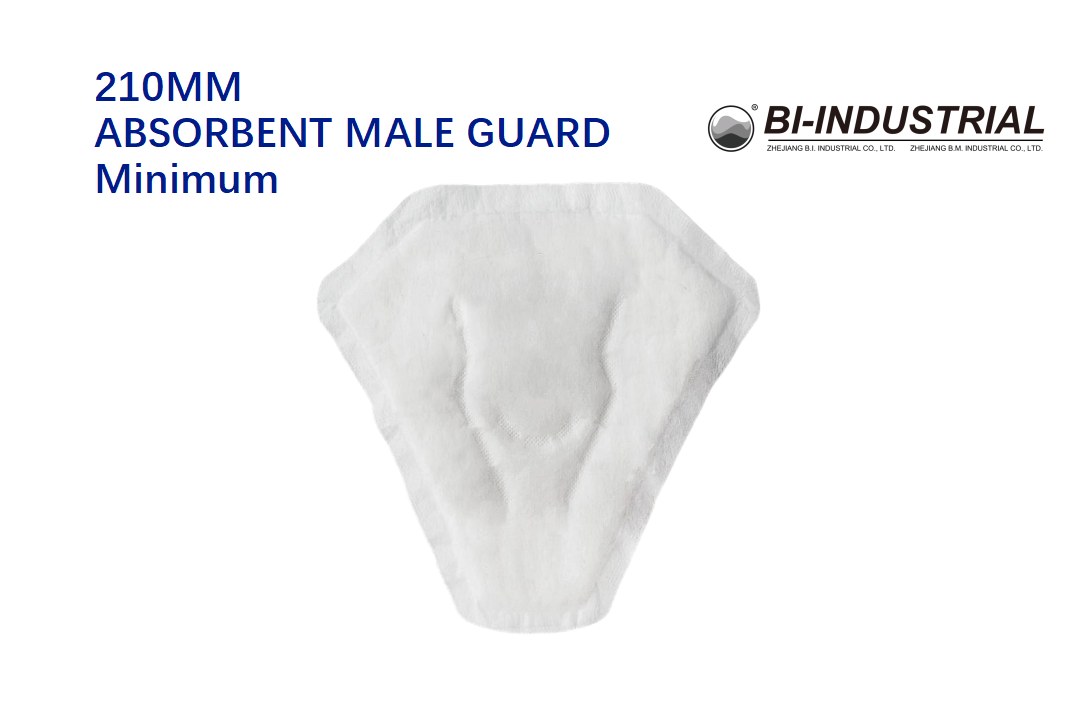
A reliable manufacturer should be able to show real production lines, stable output capacity, skilled workers, and clear production planning. Capacity verification helps you avoid delays, inconsistent supply, and poor order management.
Check whether the lines are clean, organized, and suitable for absorbent hygiene product manufacturing. The equipment should support accurate material layering, SAP distribution, core formation, cutting, folding, and packaging.
Ask for realistic production capacity based on your product type—not just total factory capacity. Men’s guards may use different line settings compared with sanitary pads, breast pads, or adult diapers.
For private label buyers, flexibility is important. Confirm whether the factory supports:
Low MOQ trial orders
Customized packaging
Different absorbency levels
Multiple pack sizes
SKU development
Export carton customization
Multilingual labeling
Ask how the factory handles peak season, repeat orders, urgent orders, and raw material shortages. A professional manufacturer should have a clear production scheduling system, not only verbal promises.
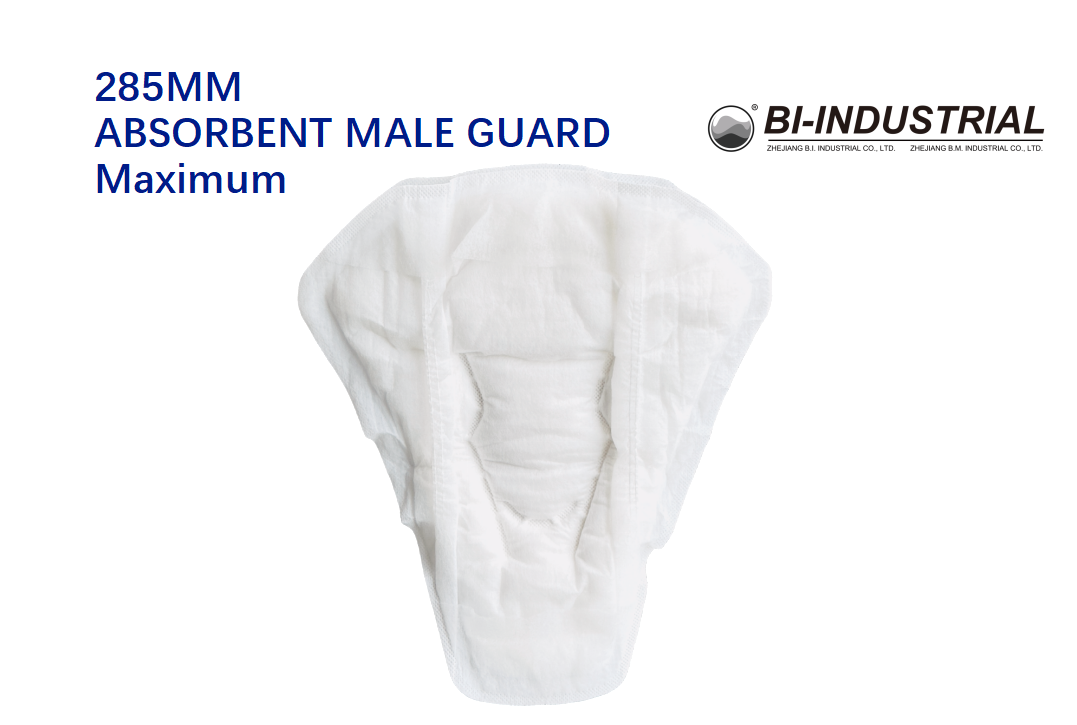
Men’s guards are performance-driven products. Users care about leakage prevention, comfort, dryness, and discretion. Therefore, your audit must include product testing and quality control procedures.
Absorption speed test
Total absorbency test
Rewet test for surface dryness
Side leakage test
Adhesive strength test
Product dimension check
Weight consistency check
SAP distribution inspection
Backsheet leakage resistance
Packaging seal strength test
Carton compression test
For men’s guards, rewet and leakage testing are especially important. A product may absorb enough liquid in theory but still feel wet or leak if the core structure, acquisition layer, or side barrier design is poor.
Material safety is critical because men’s guards are worn close to the skin for long periods. A professional manufacturer should be able to provide raw material documentation and explain material functions clearly.
The topsheet should be soft, skin-friendly, and able to transfer liquid quickly into the absorbent core. Poor topsheet quality may cause discomfort, irritation, and negative reviews.
The core usually contains fluff pulp and super absorbent polymer. Ask about the origin, grade, and quality consistency of both materials.
The backsheet should prevent leakage while maintaining comfort. Breathable film may be preferred for premium men’s guard products.
The adhesive strip must keep the product fixed inside underwear without leaving residue or losing strength during use.
For individually wrapped products, the wrapping film should be clean, durable, and easy to open.
If the supplier also works as a maternity pad manufacturer, breast pad manufacturer, cotton pad manufacturer, or one of the experienced panty liner manufacturers, they may already have established material control processes for skin-contact hygiene products. Still, you should verify that those controls are applied specifically to men’s guard production.
Certifications help demonstrate that a factory follows recognized quality and safety systems. Requirements may vary depending on your target market, but buyers should request documentation before confirming cooperation.
ISO quality management certification
Product test reports
Raw material safety reports
Factory business license
Export qualification documents
MSDS for relevant materials if applicable
Packaging compliance documents
Third-party inspection reports if available
If you are selling in highly regulated channels such as pharmacies, healthcare institutions, or government supply programs, documentation becomes even more important.
For buyers comparing suppliers across hygiene categories—such as a disposable maternity pads manufacturer, disposable under pads manufacturers, or organic sanitary pads manufacturers—certification standards and product claims should be reviewed carefully. A claim such as “organic,” “biodegradable,” or “skin-safe” must be supported by proper documentation.
A strong men’s guard manufacturer should not only produce existing designs. It should also help you improve product performance, control costs, and create market-specific solutions.
Product structure recommendation
Absorbency level adjustment
Core thickness optimization
Leak guard design improvement
Material upgrade options
Packaging development support
Sample testing and revision
Competitor sample analysis
Cost-performance balancing
For example, if your target market prefers discreet daily protection, the factory should recommend a thinner design with fast absorption and low rewet. If your customers are post-prostate surgery users, the product may require higher absorbency, better fit, and stronger leakage protection.
A factory that manufactures related absorbent hygiene products—such as a biodegradable sanitary pads manufacturers supplier or biodegradable sanitary napkins manufacturers partner—may also offer sustainable material options. However, you should check whether biodegradable materials are suitable for men’s guards in terms of absorption speed, strength, comfort, shelf life, and cost.
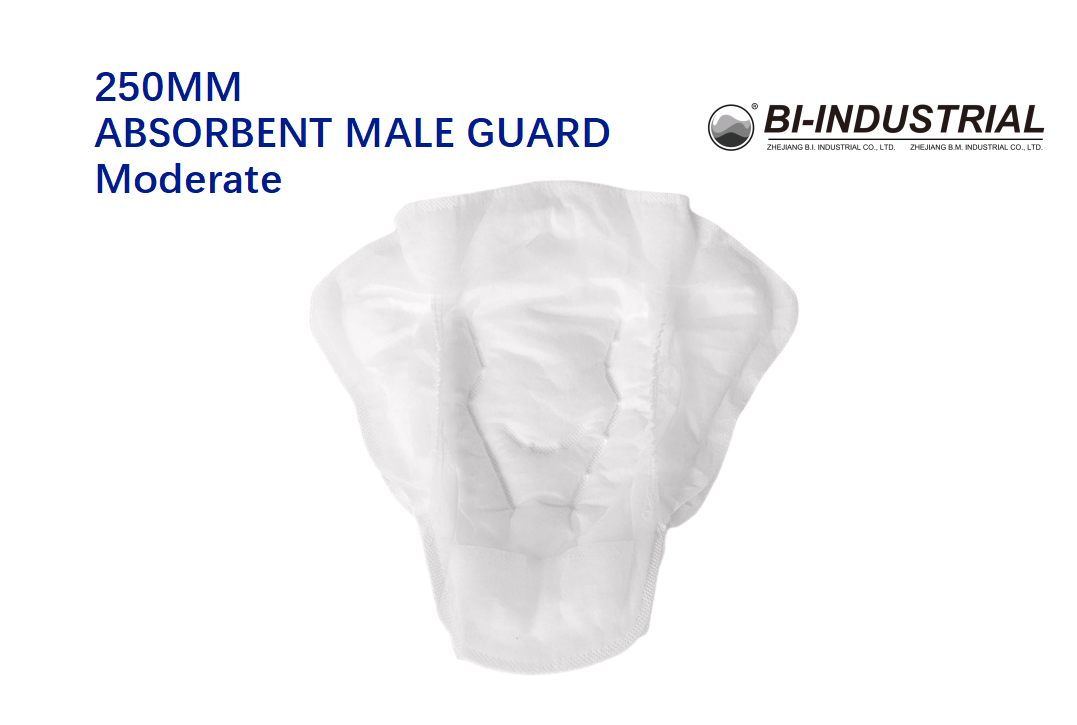
The right questions help reveal whether the manufacturer truly understands men’s guard production or only offers generic hygiene products.
What men’s guard sizes and absorbency levels do you currently produce?
Can you provide samples with different SAP ratios or thickness levels?
How do you test side leakage and rewet performance?
Can you adjust the shape for better male anatomical fit?
Do you support individually wrapped men’s guards?
Which production line will be used for our order?
What is the monthly capacity for men’s guards specifically?
What is your standard production lead time?
How do you control product weight and dimension tolerance?
What happens if raw material quality changes?
What inspections are performed before, during, and after production?
Can we receive pre-production samples before mass production?
Do you keep production records for traceability?
How do you handle defective products?
Can third-party inspection be arranged before shipment?
What is the MOQ for private label men’s guards?
Can you support multilingual packaging?
Can you provide export cartons with shipping marks?
What documents do you provide for customs clearance?
Have you exported to our target market before?
OEM service capability is especially important if you plan to build your own brand. A factory may be able to manufacture products but still lack the service ability needed for smooth private label development.
This includes product size, absorbency, surface material, backsheet, adhesive strip, and individual wrapping.
Packaging affects retail conversion. The manufacturer should support bag design, carton layout, barcode placement, SKU differentiation, and regulatory labeling.
For new brands, low MOQ support helps test the market before scaling. A good supplier should guide you toward practical customization options at lower order quantities.
Ask how many rounds of sample revision are possible and how long each sample stage takes.
For OEM cooperation, the factory should protect your packaging files, product specifications, and market information.
Many buyers source multiple hygiene categories from the same region or supplier network. You may already work with a disposable maternity pads manufacturer, maternity pad manufacturer, breast pad manufacturer, cotton pad manufacturer, panty liner manufacturers, or disposable under pads manufacturers. These suppliers may have useful absorbent product experience, but men’s guards require their own technical evaluation.
Maternity pads focus on postpartum fluid absorption and softness
Breast pads focus on milk leakage, thinness, and skin comfort
Panty liners focus on light absorption and daily freshness
Sanitary pads focus on menstrual flow control
Under pads focus on surface coverage and bed protection
Adult pull-up diapers focus on full-body fit and high absorbency
Men’s guards focus on male fit, urine absorption, discretion, and secure placement
A supplier with broad hygiene product capability can be valuable, but your audit should confirm that the factory has the right technology and testing process for male incontinence protection specifically.
Traceability helps protect your brand when quality problems occur. Without clear traceability, it is difficult to identify whether a defect came from raw materials, machine settings, worker handling, or packaging.
Raw material supplier records
Incoming inspection reports
Batch numbers
Storage conditions
Production batch records
Finished goods inspection records
Complaint tracking process
Corrective action reports
For hygiene products, traceability should cover fluff pulp, SAP, nonwoven fabric, backsheet film, adhesive, release paper, packaging film, and cartons.
Avoid suppliers that cannot provide transparent production and quality information. Low price alone should never be the deciding factor.
No clear men’s guard samples available
Vague answers about absorbency testing
No documented QC process
Poor workshop hygiene
Inconsistent product dimensions
Weak adhesive performance
No raw material traceability
Unclear MOQ and lead time
Packaging errors in previous orders
No export experience
Overpromising customization at very low quantities
Refusal to support third-party inspection
A professional manufacturer should welcome reasonable audit questions and provide evidence instead of relying only on verbal commitments.
Sample testing is one of the most important parts of supplier evaluation. Do not approve an order based only on appearance.
Check shape, size, thickness, softness, folding, adhesive position, and overall workmanship.
Pour a controlled amount of liquid onto the target zone and measure absorption speed.
After absorption, apply pressure with filter paper or tissue to check how much moisture returns to the surface.
Test product performance at different angles and pressure conditions.
Evaluate whether the guard stays in place inside underwear and whether it feels discreet during movement.
Check bag sealing, individual wrap quality, printing accuracy, carton strength, and barcode readability.
If possible, compare samples against leading market products in your target region. This helps identify gaps in comfort, thickness, absorbency, and perceived value.
Packaging quality affects both brand image and logistics performance. Even if the product is good, poor packaging can reduce customer trust and increase complaints.
Printing clarity
Color consistency
Bag strength
Seal durability
Accurate product count
Correct absorbency information
Barcode readability
Compliance with local labeling rules
Carton compression strength
Shipping mark accuracy
For e-commerce sales, packaging should survive warehouse handling and courier delivery. For pharmacy and retail shelves, packaging must look professional and communicate product benefits quickly.
A good MOQ depends on customization depth. Lower MOQs are usually possible when using existing product structures and standard raw materials, while fully customized shapes, printed individual wrappers, or special packaging materials may require higher quantities.
Product size
Absorbency design
Packaging type
Number of SKUs
Raw material availability
Printing requirements
Trial order plan
Repeat order forecast
For first-time buyers, it is usually better to begin with a proven standard product and customize the outer packaging. After collecting market feedback, you can refine absorbency, thickness, material feel, or packaging design for the next order.
Export capability is essential for international buyers. A manufacturer should understand documentation, carton requirements, shipping coordination, and destination market expectations.
Commercial invoice
Packing list
Bill of lading support
Certificate of origin if required
Product specification sheet
Carton labels and shipping marks
HS code guidance
Palletization support if needed
Export-ready packaging
If the supplier regularly exports hygiene products such as adult diapers, maternity pads, sanitary pads, breast pads, panty liners, or under pads, this may reduce communication risk and improve order efficiency.
Audit frequency depends on order volume, product complexity, and quality history.
Before first order: Full supplier qualification audit
Before mass production: Pre-production sample confirmation
During production: In-line inspection for important orders
Before shipment: Final random inspection
Annually: Factory re-audit for long-term suppliers
After major complaints: Corrective action audit
For private label hygiene products, long-term quality consistency is more important than one successful trial order. Regular audits help maintain stable performance and reduce supply chain risk.
Use the following checklist during supplier evaluation:
Production lines match product requirements
Realistic capacity confirmed
Clean and organized workshop
Skilled production team
Stable lead time
Absorption speed tested
Rewet controlled
Leakage protection verified
Adhesive strength acceptable
Product shape fits male anatomy
Incoming material inspection
In-process quality checks
Finished product testing
Batch records maintained
Defect handling process available
Skin-friendly topsheet
Reliable SAP and fluff pulp
Leak-proof backsheet
Safe adhesive
Packaging materials inspected
Private label packaging supported
MOQ clearly explained
Sample process available
Product customization options clear
Confidentiality respected
Documentation available
Carton quality suitable for shipping
Labeling requirements understood
Third-party inspection accepted
Communication is professional
A reliable manufacturer provides clear product samples, documented QC procedures, raw material traceability, stable production capacity, and professional OEM support. The supplier should be able to explain product structure, absorbency design, leakage testing, and packaging options in detail.
Absorption speed, rewet, and leakage resistance are the most important tests. Men’s guards must absorb urine quickly, keep the surface dry, and prevent side leakage during daily movement.
Some sanitary pad factories can produce men’s guards if they have the correct equipment, product design capability, and urine absorption testing process. Suppliers such as organic sanitary pads manufacturers, biodegradable sanitary pads manufacturers, and biodegradable sanitary napkins manufacturers may have relevant absorbent hygiene experience, but men’s guards still need male-specific design and testing.
A factory with adult incontinence experience can be a strong choice. A wholesale adult pull up diapers manufacturer often understands urine absorption, leakage barriers, SAP performance, and adult care market requirements. However, you should still test men’s guard samples separately.
Yes, especially if you plan to source multiple categories. Suppliers such as a disposable maternity pads manufacturer, maternity pad manufacturer, breast pad manufacturer, cotton pad manufacturer, panty liner manufacturers, and disposable under pads manufacturers may support broader product portfolio development. Still, each product category should be audited based on its own performance requirements.
Yes. Professional manufacturers should accept third-party inspection. This is especially recommended for first orders, large-volume orders, retail packaging orders, and private label products entering new markets.
A qualified men’s guard manufacturer should combine technical product knowledge, stable production, reliable materials, strict QC, and responsive OEM service. The best supplier is not always the cheapest one—it is the one that can help your brand reduce risk, maintain quality, and build repeat customer trust.
For brands developing men’s guards, adult incontinence products, or broader hygiene product lines, a structured audit process helps identify the right long-term manufacturing partner. By evaluating production capability, sample performance, documentation, packaging execution, and export support, you can make purchasing decisions with confidence and improve both product quality and inquiry conversion.
*BI-Ehealthcare makes no warranties or representations regarding the completeness or accuracy of the information. This information should be used only as a guide and should not be relied upon as a substitute for professional medical or other health professional advice.