EN
EN
 jp
jp  ko
ko  fr
fr  de
de  es
es  it
it  ru
ru  pt
pt  ar
ar  th
th 
A men’s incontinence napkin (male Guard) is a multi-layer absorbent hygiene product designed to manage urine leakage through a structured system of rapid acquisition, distribution, absorption, and leakage protection. Each layer has a specific engineering function that directly impacts dryness, comfort, and leak prevention performance.
For OEM and brand buyers, understanding the internal structure of a male Guard is critical because material configuration determines absorbency level, skin comfort, odor control efficiency, and end-user satisfaction.
A standard men’s incontinence napkin is composed of multiple functional layers rather than a single absorbent sheet. The typical structure includes:
Top sheet (skin-contact layer)
Acquisition distribution layer (ADL)
Absorbent core (fluff pulp + SAP)
Tissue wrapping layer
Back sheet (leakage barrier)
Adhesive system
Release paper
This layered design ensures that liquid is quickly absorbed, evenly distributed, and securely locked inside the core structure.
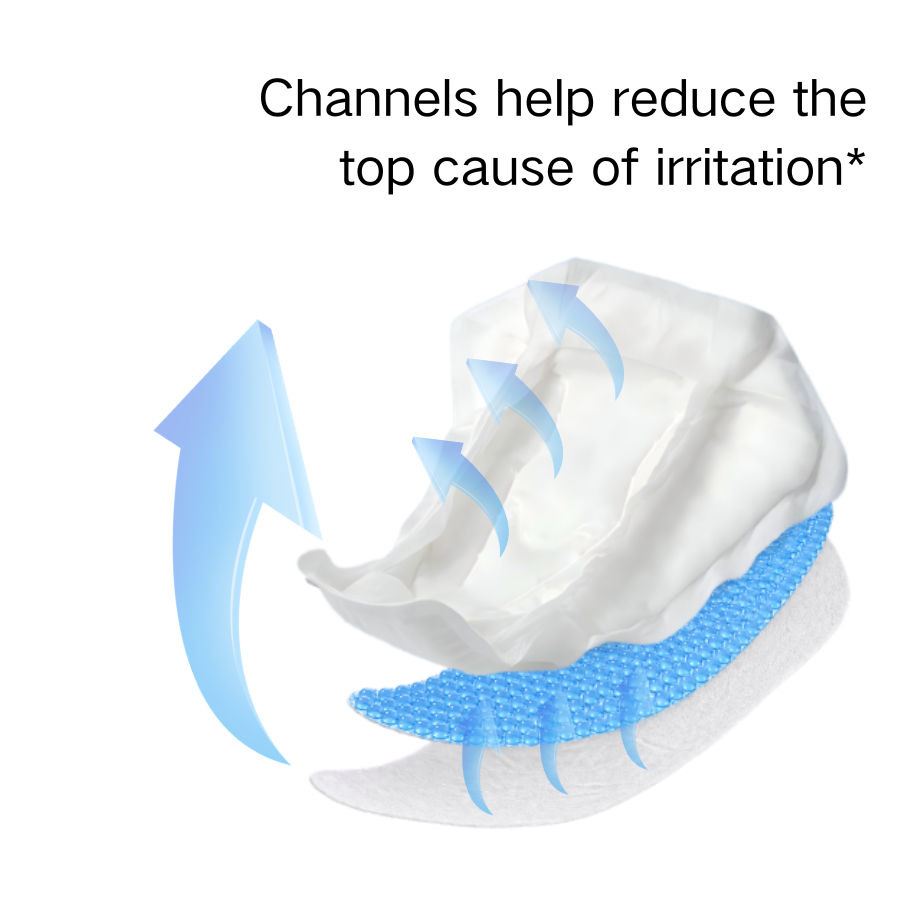
The top sheet is the skin-contact layer made from soft nonwoven fabric. Its function is to allow rapid liquid penetration while maintaining a dry, comfortable surface. Hydrophilic treatment is often applied to improve absorption speed and reduce rewet.
The Acquisition Distribution Layer (ADL) is positioned between the top sheet and absorbent core. It rapidly spreads liquid across the pad surface to avoid localized saturation and improves overall absorption efficiency, especially under movement conditions.
The absorbent core is the key functional component, typically composed of fluff pulp and Super Absorbent Polymer (SAP). It converts liquid into gel, locks moisture inside the fiber structure, and maintains stability under pressure to prevent leakage and rewet.
The back sheet is the outer leakage-proof layer, usually made of PE film or breathable microporous film. It prevents liquid leakage while maintaining structural integrity and, in premium products, supports breathability for improved comfort.
Barrier cuffs are elastic side guards that help prevent side leakage. They guide liquid toward the absorbent core and improve anatomical fit, which is especially important for active male users.
The adhesive system secures the male Guard inside underwear, ensuring correct positioning during movement. The release paper protects the adhesive before use and enables quick, hygienic application.
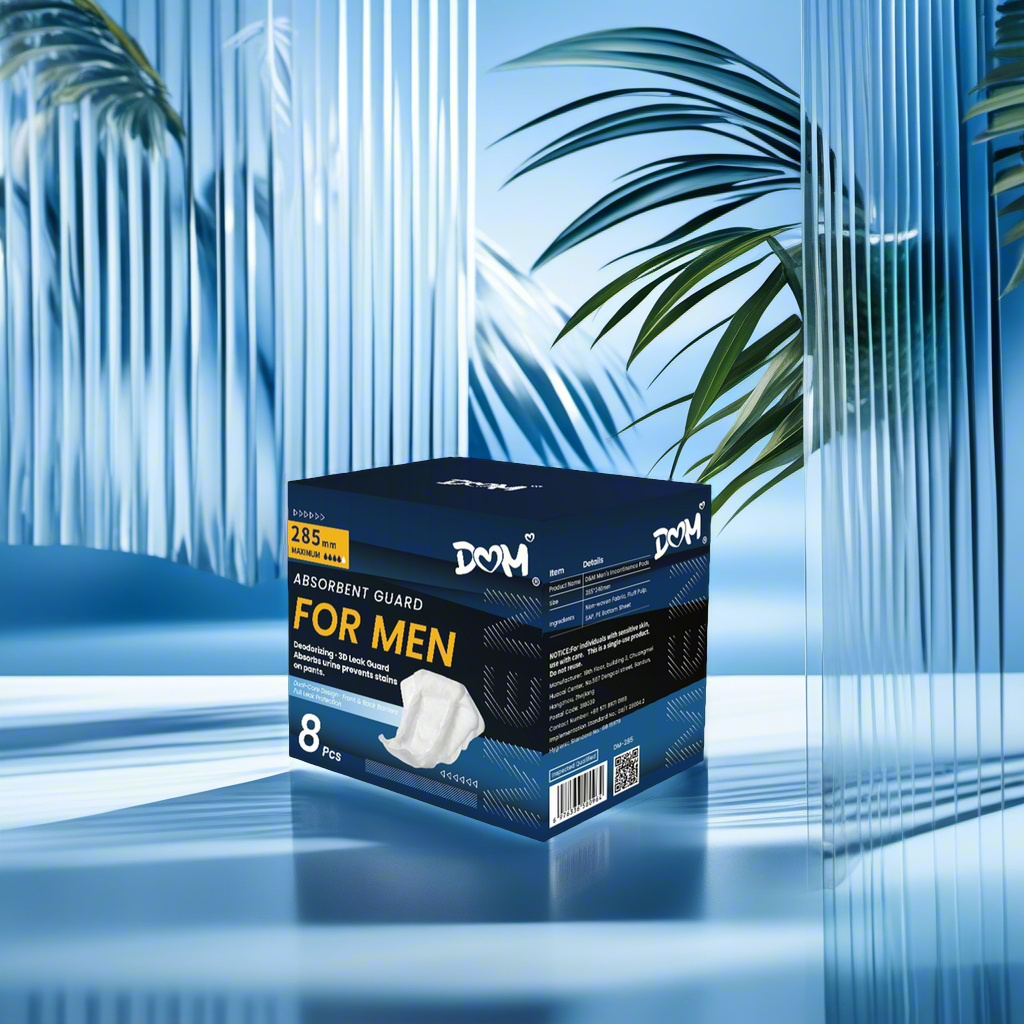
A male Guard is anatomically engineered for male urinary flow patterns, while standard incontinence pads are typically unisex. Male Guards feature a front-focused absorbent zone, T-shaped or contoured design, and improved stability for movement-based use.
Male Guard: Designed for male anatomy and directional leakage
Standard pad: General-purpose absorbent hygiene product
Male Guard: More secure fit inside male underwear
Each structural layer contributes directly to real-world performance. Poor design in any one layer can lead to leakage or discomfort.
Top sheet speed determines dryness perception
ADL efficiency affects fluid distribution
SAP quality controls absorption capacity
Core structure stability prevents deformation
Back sheet integrity ensures leak protection
In OEM manufacturing, balance between comfort, absorbency, and structural stability is more important than simply increasing SAP volume.
Thin core design with lower SAP content, suitable for light dribble protection and discreet daily use.
Balanced fluff pulp and SAP system with ADL layer, designed for everyday male leakage protection.
Double-core reinforcement with higher SAP concentration and upgraded barrier cuffs for moderate leakage conditions.
OEM buyers should evaluate structure performance rather than focusing only on cost or appearance.
Rewet performance (surface dryness)
Absorption speed and distribution
SAP uniformity and ratio balance
Leakage edge control performance
Skin comfort during extended wear
Odor control efficiency
A well-designed male Guard structure improves user satisfaction, reduces complaints, and increases brand retention in retail markets.
It typically includes a nonwoven top sheet, ADL layer, fluff pulp + SAP core, tissue wrapping, PE back sheet, adhesive strip, and release paper.
SAP transforms urine into gel, locking moisture inside the core and preventing leakage and surface wetness.
No. Male Guards are targeted absorbent pads, while adult diapers are full-coverage garments designed for heavier incontinence.
Leak prevention depends on ADL performance, SAP absorption capacity, barrier cuffs, and back sheet integrity.
Yes. OEM manufacturers can customize size, SAP ratio, absorbent core design, ADL configuration, and back sheet material.
*BI-Ehealthcare makes no warranties or representations regarding the completeness or accuracy of the information. This information should be used only as a guide and should not be relied upon as a substitute for professional medical or other health professional advice.
*Contact us:https://www.bi-ehealthcare.com/contact-us.html