EN
EN
 jp
jp  ko
ko  fr
fr  de
de  es
es  it
it  ru
ru  pt
pt  ar
ar  th
th 
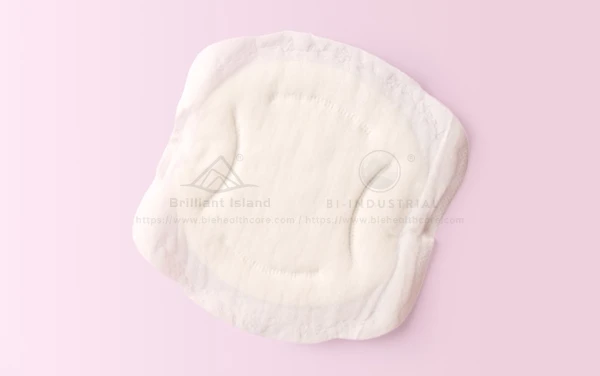
Mini sanitary pads are shorter, lighter menstrual products intended for light flow, spotting, or the beginning and end of a period; regular pads provide a larger absorbent area and higher retention for routine menstrual flow. Mini pads should not automatically be classified as panty liners: a mini pad may use a menstrual-pad core, barrier system, and absorbency target even when its footprint is compact.
| Comparison | Mini sanitary pad | Regular sanitary pad |
|---|---|---|
| Common positioning | Light flow, spotting, first/last period days, compact carry | Normal daytime menstrual protection |
| Typical length range | Often about 140–195 mm, depending on market and factory platform | Often about 210–280 mm for daytime designs |
| Core requirement | Low bulk with fast acquisition and controlled wetback | Higher core mass and wider fluid-distribution area |
| Wings | Optional; selected according to garment stability and target price | Common for improved fixation and side coverage |
| Packaging role | Entry SKU, teen line, travel pack, light-flow extension | Core volume SKU in most menstrual-care portfolios |
No. The categories can overlap in size, but they should be separated by intended use and verified performance. A panty liner primarily manages discharge or very light spotting. A mini menstrual pad should be engineered and labelled for light menstrual flow. The difference may involve core weight, SAP level, backsheet barrier, embossing, channel design, wing construction, and tested retention.
This distinction matters for SEO and product claims as well as manufacturing. Using “liner,” “mini pad,” and “regular pad” interchangeably can confuse buyers and create specification disputes.
A mini pad has less area available for fluid distribution, so the core cannot simply be a shortened regular-pad core. If the central loading zone becomes saturated too quickly, the product may leak before its theoretical capacity is reached. Better designs combine a fluid-permeable topsheet, a small acquisition layer, a stable airlaid or pulp structure, controlled SAP distribution, and embossing that preserves flexibility.
Regular pads can distribute fluid over a larger longitudinal area and may incorporate stronger side channels, wider rear coverage, or zone-specific core weights. The design goal is not maximum material usage; it is efficient use of each gram of absorbent material.
For most markets, a regular day pad is the anchor SKU because it serves the broadest use case. A mini pad is valuable when retail data or channel feedback shows demand for light-flow products, teen starter ranges, discreet packs, or lower-cost trial formats. Brands can also use mini pads to create a complete absorbency ladder without forcing consumers to use a full-size product for minimal flow.
Ask the factory to provide a comparison matrix with finished dimensions, core weight, total weight, thickness, strike-through, wetback, retention before leakage, peel performance, and wrapper integrity. Test samples after conditioning and after transport simulation, because temperature can affect adhesive and compressed cores can recover after packing.
The factory should also confirm whether both sizes run on the same platform. Shared raw materials and packaging formats may reduce MOQ and lead time, while different die-cut shapes, wing assemblies, or wrapper systems may require separate tooling.
BI-Ehealthcare supplies wholesale sanitary pads and supports customized size, core, topsheet, wing, wrapper, and pack-count development. Buyers evaluating a combined pad-and-liner portfolio can review the company’s feminine hygiene product solutions and submit target samples, performance requirements, and destination-market needs for an OEM feasibility review.
It is typically positioned for light menstrual flow, spotting, or the first and last days of a period.
They can be, but the label is not enough. Compare core construction and verified absorption, retention, and wetback results.
Wings are optional. They can improve fixation, but they add material, adhesive, tooling, and packaging considerations.
Many mini formats fall near 140–195 mm, but dimensions should be selected from user fit, target flow, garment coverage, and factory capability.
They can share a visual identity, but pack dimensions, product count, compression, and mandatory information must be adapted to each SKU.
BI-Ehealthcare supports OEM and ODM feminine hygiene projects covering material selection, absorbency design, sample development, packaging, quality control and export coordination. Contact BI-Ehealthcare with your target market, size, absorbency, pack count and expected order volume.