EN
EN
 jp
jp  ko
ko  fr
fr  de
de  es
es  it
it  ru
ru  pt
pt  ar
ar  th
th 
Superabsorbent polymer can improve liquid retention in panty liners, but more SAP does not automatically produce a better liner. The useful dosage depends on fluid type, core structure, product thickness, acquisition speed, pressure during wear, and the amount of cellulose or airlaid material available to distribute liquid around the polymer.
SAP is a crosslinked absorbent material that swells and holds aqueous fluid. In a liner, it can increase retention per gram of core and reduce the amount of bulky cellulose needed. This makes SAP useful for thin products, but the polymer must be integrated into a structure that can transport fluid to the particles.
EDANA notes that SAP is used in feminine hygiene pads and liners because of its high absorption and retention capability. Laboratory free-swell values, however, should never be treated as finished-product capacity. Menstrual fluid and discharge differ from pure water, and body pressure reduces the space available for swelling.
When particles near the loading point swell rapidly, they may form a dense gel layer that restricts fluid movement into the rest of the core. This effect, often called gel blocking, can create a product with high theoretical capacity but poor real-use acquisition. Very high SAP concentration may also increase stiffness, particle migration, core cracking, and uneven thickness.
The solution is usually a balanced core: controlled SAP particle size and distribution, sufficient capillary material, stable bonding, and a topsheet/acquisition structure that spreads the first fluid dose.
| Metric | What it shows | Why it matters |
|---|---|---|
| Strike-through or penetration time | Speed at which fluid enters the product | Slow entry can cause pooling or edge run-off |
| Wetback or rewet | Fluid returned to the surface under pressure | Lower wetback supports a drier skin-contact feel |
| Absorption/retention | Fluid held before leakage or after loading | Confirms the product matches its light-flow claim |
| Core integrity | Resistance to cracking, bunching, or particle migration | Protects comfort and consistent performance |
| Thickness and flexibility | Bulk and bending behavior | Important for discreet everyday wear |
Uniform distribution is a starting point, not always the final answer. Zone dosing can place more absorbent material near the expected loading area while preserving softness at the ends. The pattern must match the acquisition layer and embossing channels. A narrow central SAP zone without lateral distribution can overload quickly; a very wide zone may add cost without improving use.
Core bonding also matters. Tissue wraps, airlaid bonding, adhesive fibers, or controlled hot-melt application can stabilize particles. Excess bonding may reduce pore volume, so the factory must balance integrity with fluid permeability.
A reliable development programme changes one variable at a time or uses a designed experiment. Typical variables include SAP grade, particle-size range, core weight, pulp-to-SAP ratio, acquisition-layer basis weight, embossing pressure, and compression in the retail pack. Samples should be tested with a defined liquid, dosing volume, loading point, dwell time, pressure, and conditioning method.
Importers should ask the factory to report test conditions, not only final numbers. Results from different methods cannot be compared directly.
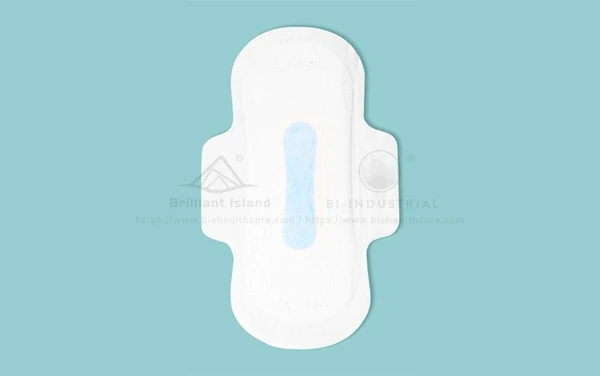
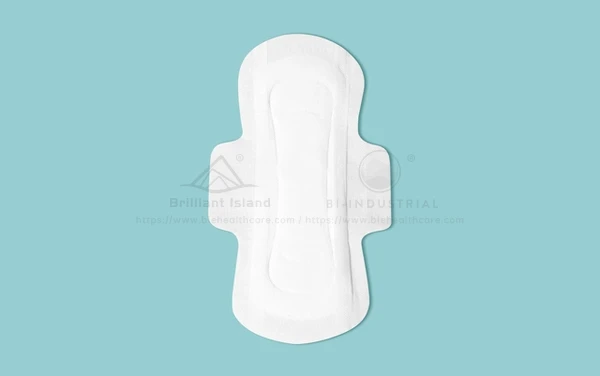
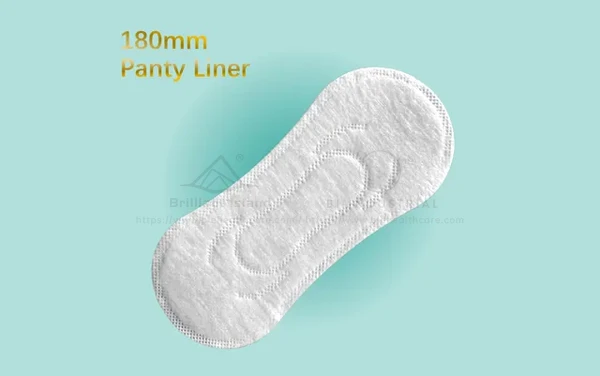
There is no universal ratio. A daily liner may use little or no SAP, while a light-flow liner may require more retention. The correct range is the lowest material level that consistently meets strike-through, wetback, leakage, flexibility, and cost targets. BI-Ehealthcare can develop trial cores through its OEM/ODM hygiene manufacturing service and align the final specification with the selected panty liner product format.
SAP grades used in absorbent hygiene products should be sourced with appropriate safety documentation and evaluated as part of the complete finished product and destination-market requirements.
It may increase retention, but excessive or poorly distributed SAP can slow acquisition, increase stiffness, and create gel blocking.
Yes. Tissue, airlaid paper, cellulose, or other absorbent structures can be used for low-fluid applications.
Strike-through or penetration time measures how quickly a defined liquid dose enters the product under a specified method.
Leakage can result from slow acquisition, poor distribution, core saturation at one point, product movement, weak edge barriers, or a mismatch between the use case and product size.
BI-Ehealthcare supports OEM and ODM feminine hygiene projects covering material selection, absorbency design, sample development, packaging, quality control and export coordination. Contact BI-Ehealthcare with your target market, size, absorbency, pack count and expected order volume.