EN
EN
 jp
jp  ko
ko  fr
fr  de
de  es
es  it
it  ru
ru  pt
pt  ar
ar  th
th 
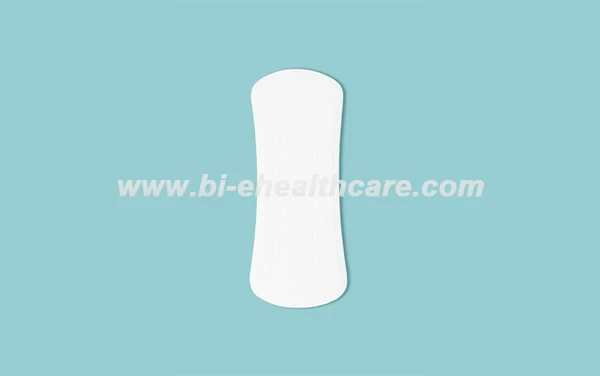
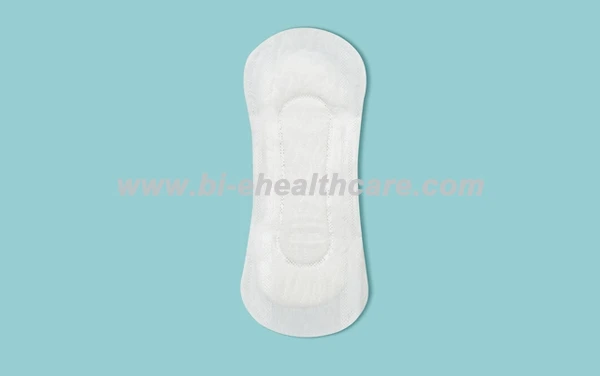
An ultra-thin panty liner is engineered by increasing fluid-handling efficiency per millimetre—not by removing material without redesigning the core. Comfort depends on the combined behavior of the topsheet, acquisition layer, absorbent core, backsheet, embossing, adhesive, and finished shape. A liner can be thin yet uncomfortable if it feels wet, wrinkles, traps heat, or moves during wear.
Consumers usually perceive thinness through flexibility, edge softness, fit, and low visibility rather than a single caliper measurement. A rigid 1 mm product can feel more noticeable than a softer 1.5 mm product. Therefore, OEM specifications should include thickness under a defined pressure together with bending, recovery, and placement observations.
Thin cores often use airlaid paper, tissue-SAP composites, low-bulk cellulose structures, or preformed absorbent laminates. The core must create a capillary path before SAP swelling becomes dominant. If the structure is compressed too heavily, the liner may look thin in the pack but absorb slowly after opening.
Embossing can stabilize the core and create visual definition. It can also support fluid direction, although deep or dense patterns may reduce absorbent volume and make the product stiff. Pilot trials should compare embossing pressure, channel geometry, and core recovery after compression.
“Breathable” can refer to air permeability, water-vapour transmission, or simply a consumer sensation. These are not interchangeable. The backsheet must still prevent fluid strike-through, so open porosity cannot be increased without considering barrier performance.
Common approaches include microporous breathable films, film-nonwoven laminates, lower adhesive coverage, and peripheral areas with less occlusion. The garment adhesive pattern is especially important: full-area coating can reduce flexibility and vapour movement even when the film itself is breathable.
The topsheet controls first contact, fluid entry, and friction. Hydrophilic spunbond, thermal-bond nonwoven, apertured materials, and cotton-contact layers each produce different softness, strike-through, and rewet behavior. A soft surface with poor liquid transfer can remain damp; a very open surface may transfer quickly but feel coarse.
For sensitive-skin positioning, buyers should define fragrance, lotion, colourant, and additive requirements and request evidence for any marketing claim. Material identity alone does not prove a finished product is hypoallergenic.
| Design decision | Potential benefit | Risk to control |
|---|---|---|
| Lower core weight | Less bulk and cost | Reduced retention or local saturation |
| More SAP | Higher retention per gram | Gel blocking, stiffness, slower acquisition |
| Microporous backsheet | Improved vapour transmission | Barrier inconsistency or higher material cost |
| Reduced adhesive coverage | Better flexibility and breathability | Movement, curling, or detachment |
| Deep embossing | Shape stability and visual differentiation | Hard points and reduced core pore volume |
Use strike-through, wetback, retention or absorption before leakage, thickness, basis weight, dimensions, adhesive stay-in-place, clean removal, air permeability or water-vapour transmission where relevant, package compression recovery, and wearer-panel feedback. Test the complete product after storage, because film, adhesive, and compressed cores can change under heat and time.
Differentiate through a defined use case and measurable performance rather than generic claims. Options include a compact liner for everyday discharge, a longer light-flow liner, a cotton-contact unscented version, or a lower-plastic packaging programme. BI-Ehealthcare offers ultra-thin panty liner customization and can align core, topsheet, backsheet, adhesive, and packaging through its OEM/ODM process.
The practical minimum depends on absorbency, material recovery, line capability, stiffness, packaging compression, and the test pressure used for thickness.
Not always. Efficient composite cores can improve retention per unit thickness, but thinness must be validated through acquisition, wetback, and leakage testing.
It usually refers to controlled vapour transmission through a barrier film or laminate. The exact claim should be tied to a defined test method.
Common causes include insufficient garment adhesive, poor shape balance, web-tension distortion, stiff embossing, incompatible underwear fabric, or humidity effects.
Breathability depends on the complete product, not only the skin-contact fibre. Core density, film, adhesive coverage, and moisture condition also matter.
BI-Ehealthcare supports OEM and ODM feminine hygiene projects covering material selection, absorbency design, sample development, packaging, quality control and export coordination. Contact BI-Ehealthcare with your target market, size, absorbency, pack count and expected order volume.